



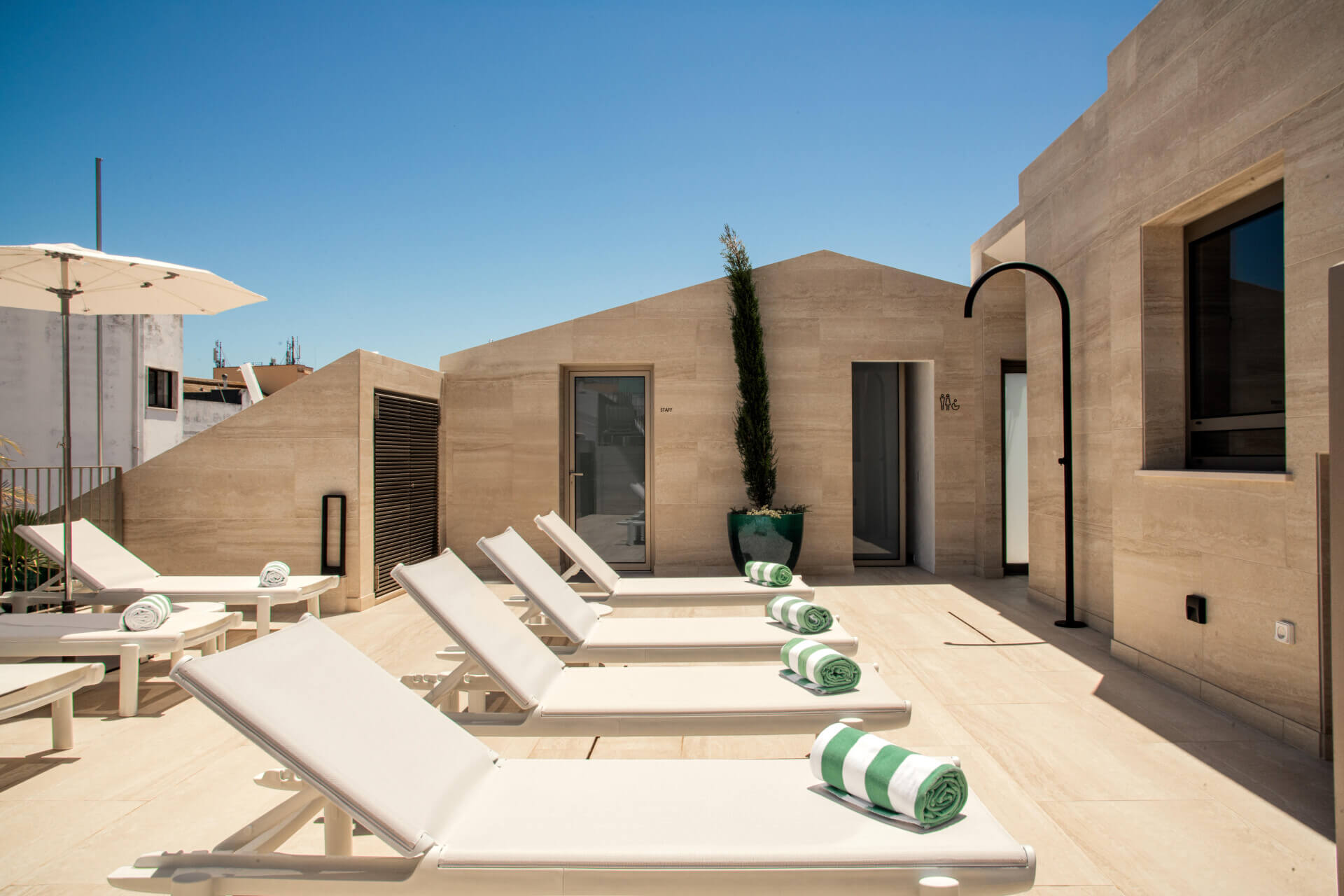
How much does a professional sun lounger actually cost? The calculation that few hotels make

When a hotel, campsite or swimming pool is replacing its sun loungers, the first step is usually to compare purchase prices. This makes sense, but in a professional setting, that information alone is not enough. Two sun loungers may appear similar at first glance but perform very differently over time. The difference lies not only in their initial cost, but also in how long they last, what maintenance they require, and how they affect the establishment’s day-to-day operations. In high-traffic areas, choosing solely on price can prove costly. That is why, rather than talking about a cheap or expensive sun lounger, it is better to talk about the true cost of ownership. In this article, we explain how to assess that cost more comprehensively and why, in many contract projects, the most cost-effective option is not always the one with the lowest initial price.
The purchase price doesn't tell the whole story
At first glance, the differences seem clear:
- Economical sun lounger: €80–€150
- Professional sun lounger (contract): €200–400
This price range sets the standard for pool and hotel sun loungers, and often leads to quick decisions: buying more units for less money. However, this comparison is often incomplete if one does not take into account the intended use for which each solution has been designed. The budget sun lounger is intended for occasional domestic use, whilst the professional sun lounger is designed for intensive daily use in hotels and at swimming pools throughout the season.
Real useful life in hotels and swimming pools
One of the factors that has the greatest impact on the cost-effectiveness of outdoor furniture is the product’s actual lifespan under demanding conditions. In real-world professional use, the difference in durability is significant:
-
Budget sun lounger: 1–2 seasons
-
Professional sun lounger: 15–20 years
This directly addresses one of the most frequently asked questions: how long do sun loungers last in hotels or at swimming pools? The sun loungers in these establishments are subjected to a constant combination of factors that accelerate wear and tear:
-
UV radiation
-
Chlorine and saline environments
-
Daily, continuous use
-
Regular cleaning
-
Stacking, repositioning and maintenance operations
That is why durability depends not only on the material, but also on the design, the quality of manufacture and whether the product has actually been designed for intensive use. A sun lounger that needs replacing prematurely not only entails an additional purchase cost, but also leads to issues, administrative time and a disruption to operations in the middle of the season.
The key formula: Cost per use
To compare options more realistically, it’s worth rephrase the question. It’s not just about how much it costs to buy a sun lounger today, but how much it costs to use it over its lifetime. To make a rational decision, you need to change your thinking:
Cost per use = (Purchase price + maintenance + replacements) / years of useful life
This calculation allows you to compare options realistically. It is not about how much it costs to buy today, but how much it costs to use the sun lounger over its lifetime. This is where the maintenance of hotel and pool sun loungers, and the possibility of repair or replacement (such as replacing the sun lounger fabric), play a key role in the total cost.
18-year comparison: a practical example
This comparison is based on a scenario of intensive use and illustrates how the cumulative cost changes when a sun lounger requires frequent replacement compared to a professional solution designed for greater durability.

This approach helps to make more rational decisions, as it takes into account factors that are often overlooked in the initial comparison:
- Replacements needed in the medium term
- Accumulated maintenance
- Availability of spare parts
- Operational impact of breakages or damage
When viewed in this light, the difference between a low-cost solution and a professional solution usually becomes much clearer.
Hidden costs that almost no one takes into account
In contract environments, the total cost is not determined solely by the product. It is also influenced by a range of indirect costs that often do not appear in the initial budget but do feature in day-to-day operations.
Staff time
- Withdrawal or replacement
- Rearrangement of furniture
- Internal incident management
- Tracking of restocking
Maintenance
- More frequent cleaning is required for lower-quality materials
- Replacement of fabrics or parts
- Increased workload in the maintenance of sun loungers
Operational during the high season
Incidents are particularly costly when they occur at peak times. In such circumstances, any breakdown or unavailability affects both the service and the team’s organization.
Image of the establishment
Outdoor furniture is part of the customer experience. A sun lounger that is damaged, wobbly or looks worn conveys a sense of neglect that directly affects how the space is perceived.
What happens when you choose based solely on price
Choosing solely on the basis of price usually means:
- Frequent restocking
- Increased operational workload
- More incidents during the high season
- A less polished image
- Higher cumulative cost
It is a decision that seems efficient in the short term, but which causes constant friction in day-to-day operations. This is particularly true when opting for cheap hotel sun loungers without taking their actual durability into account.
Depreciation and profitability in a hotel
A professional sun lounger should not be viewed merely as a purchase. In a hotel or poolside project, it forms part of a broader investment linked to durability, the image of the space and operational efficiency. When the product stands the test of time, the establishment benefits in several ways:
- Reduces incidents
- Improves cost predictability
- Minimise urgent replacements
- It provides a more consistent view of outer space
From this perspective, the depreciation of furniture depends not only on the price paid, but also on the product’s ability to continue to function well, retain its appearance and minimise operational issues over the years.
Invest with a long-term perspective, not just for the short term
In a professional setting, the difference between a seemingly cheap sun lounger and a truly cost-effective option is not usually apparent at the time of purchase. It becomes clear over time. That is why, before making a decision, it is worth broadening the question: not just how much it costs to buy a sun lounger, but how much it will cost to keep it in working order, in good condition and in keeping with the establishment’s standards in five years’ time. In hotels, swimming pools and campsites, a good choice of outdoor furniture is not based solely on price. It is based on a combination of durability, maintenance, functionality and image. And that is where the true cost begins to make sense.