



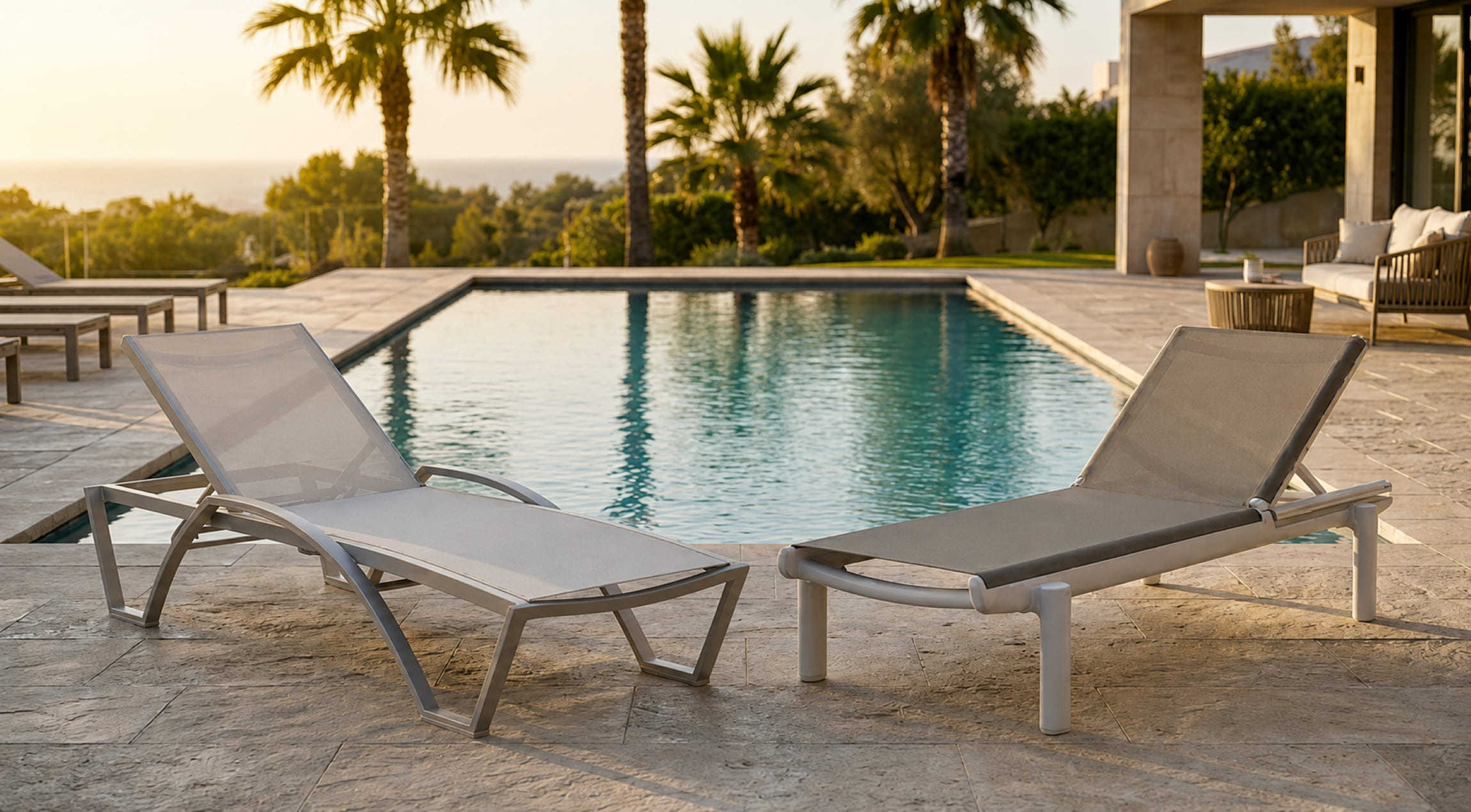
Aluminium vs resin sun loungers: how to choose based on your environment

The question hotel managers ask us every season is not which sun lounger to buy, but which material to choose. Aluminium and resin are not equivalent options. Each performs better depending on the type of installation, level of use, and operational model. Choosing between aluminium and resin sun loungers is not a matter of design, but of context. In this guide, we explain how to decide with real criteria, based on the experience of a manufacturer that works with both materials.
What makes aluminium sun loungers stand out
Aluminium is a widely used material in professional outdoor furniture, especially in projects where a balance of durability, design, and performance is required. In the case of sun loungers, aluminium offers:
- High corrosion resistance
- Strong performance against salt and humidity
- A more premium visual finish
Aluminium delivers solid performance in demanding environments. Additionally, configurations such as folding aluminium loungers—like our Cannes model —make space management and storage easier in certain installations.
Which aluminium model to choose based on your installation
Within the aluminium range, each model is designed for a specific use:
- Etna: designed for spas, rooftops, and premium spaces where aesthetics are part of the experience
- Etna High: With a higher structure, designed for premium relaxation areas where comfort and ergonomics are key
- Olimpia: a versatile option for installations seeking a balance between design and functionality
- Iris: ideal for projects where design and differentiation are essential
You can view all models in the Balliu aluminium sun loungers category
When aluminium is not the best choice
Aluminium is a highly versatile material, but not always the best option. In high-use pools with constant exposure to chlorine, resin performs better as a chlorine-resistant solution. It may also not be ideal in projects where initial cost is a key constraint. Similarly, in beach environments, resin offers better resistance to constant sand friction. Each material has its optimal environment.
What makes resin sun loungers stand out
Resin, made from polypropylene reinforced with mineral fillers, is the standard in contract furniture for high-use environments. Far from basic domestic solutions, professional resin sun loungers are designed to withstand demanding conditions over long periods.In intensive-use environments such as large pools or beach concessions, resin is not just an alternative—it is the baseline. This material stands out for its resistance to chlorine, salt, sand abrasion, and frequent cleaning.
Which resin model to choose based on your installation
Within the resin sun loungers range , each model is designed for a specific context:
- Noa: for projects seeking the durability of resin with an elegant design. Its fabric fixed with rails provides a cleaner aesthetic
- Eva Pro: Ideal for pools, campsites, beachfront locations, and high-use installations. Cord-fixed fabric, very easy to replace
- Eva RG: Robust and functional, suitable for both saltwater and freshwater environments with intensive use, offering a reliable and cost-efficient long-term solution
- Carmen / Lola: designed for large-scale projects with many units and very intensive use, where optimizing investment without sacrificing durability is key
When resin is not the first choice
Although highly versatile, resin is not always the best option. In spaces where aesthetics are critical—such as spas, premium resorts, or VIP areas—aluminium provides a higher perceived value. It may also be less suitable in projects where a lighter product is required. The decision is not about better or worse, but about suitability for the intended use.
Aluminium vs resin: the comparison you need before deciding
| Criteria | Aluminium | Polypropylene resin |
|---|---|---|
| Weight per unit | Minor | Heavier |
| Chlorine resistance | High | Very High |
| Saltpetre resistance | High | Very High |
| UV resistance | High | Very High |
| Replacement system | Easy | Very easy |
| Stackability | Yes | Yes |
| Purchase price | Higher | Minor |
| Service life | 10–15 years | 10–20 years with spare parts |
| Aesthetics | Premium | Versatile |
| Optimal environment | Spa, rooftop | Swimming pool, beach, campsite |
Aluminium stands out in aesthetics. Resin stands out in operations and long-term cost efficiency. You can also check out our post where we compare the different materials for outdoor furniture.
Choose aluminium if your installation meets these conditions
Aluminium is the natural choice when furniture is part of the perceived value of the space. It works especially well in:
- 4–5 star hotels with rooftops or terrace
- Resorts where design is part of the experience
- Spas or wellness areas where aesthetics are a priority
Here, the decision is not only functional—it is strategic positioning.
Choose resin if your installation meets these conditions
Resin is the most efficient option in high-use environments. It performs best in:
- Hotels with high-use pools exposed continuously to chlorine, water, and daily cleaning
- Campsites, water parks, or beach clubs
- Installations with large volumes of sun loungers
In this article, we detail the impact of choosing loungers with replaceable components, including their environmental impact. Over 18 years, the annual cost of a lounger with replacement parts is €20, compared to €51/year for a lounger without replacements.
What If You Combine Materials in the Same Installation?
This is a standard practice, since regardless of the frame material, both types of sun loungers use the same Textilene fabric, which makes it easy for many hotels to combine aluminum in premium areas with resin in high-traffic areas such as the pool or beach. This isn’t a contradiction—it’s optimization. Analyzing the actual use of each space allows for more efficient long-term decisions. When approached this way, the choice of material ceases to be a one-off decision and becomes part of the overall planning.